


Parashat Shemini – Year 3 – What Can We Eat and What Not?
Shabbat Shalom, Nazarene family.
This week we will study the parashat Shemini, portion of year 3, where we will see a clear list of what can and cannot be eaten, according to Yahweh’s instructions. We will learn that not every animal is good for food and that there are important differences between the clean and the unclean. We will read that obedience brings order and care to our lives, even in what seems small, such as food. We will see that Yahweh wants us to be a set-apart people, conscious of what enters our bodies and our hearts.
Vayiqra (Leviticus) 11:46-47
46 ‘This is the law of the animals and the birds and every living creature that moves in the waters, and of every creature that creeps on the earth,
47 to distinguish between the unclean and the clean, and between the animal that may be eaten and the animal that may not be eaten.’ “
This week corresponds to the reading of the texts (in bold):
- Vayiqra (Leviticus) 9:1-10:11 / 10:12-11:32 / 11:1-47
- Shemuel Bet (2 Samuel) 6-7
- Mishlei (Proverbs) 23
- Tehillim (Psalms) 78
- Ma’asei (Acts) 10:1-23 / 10:24-33 / 10:34-48
Summary of the weekly study, Year three:
Vayiqra (Leviticus) 11:1-47
In these verses, we are shown how Yahweh instructed Israel to differentiate between the clean and the unclean, the permitted and the forbidden in terms of food. We will learn that this is not just a list of animals, but a constant reminder to live with discernment and obedience. We will see that purity is not a minor matter, but a reflection of the set-apartness to which we are called. The central teaching is that our daily lives, even when eating, should reflect our separation to Yahweh. In this passage, we learn to walk in set-apartness and obedience.
Tehillim (Psalms) 78
In these verses, we will see how the psalmist recalls the history of Israel and the importance of not forgetting what Yahweh has done. We will learn that each generation has a responsibility to pass on to their children the wonders, commandments, and provisions that Yahweh gave to His people. We will also read about Israel’s disobedience and the consequences they faced when they turned away from Him. The central teaching is clear: memory and obedience are key to remaining steadfast in the faith. In this passage, we learn to remember and teach Yahweh’s works faithfully.
Ma’asei (Acts) 10:34-48
In these verses, we will see how Kepha (Peter) understands that Yahweh does not show favoritism, but welcomes all who fear Him and do what is right. We will learn that faith in Yeshua opens the door of salvation to both Jews and Gentiles, showing that the message is universal. We will read how the Set-apart Spirit descended upon all who were listening and how they were immersed (baptized) in the name of Yeshua. In this passage, we learn about the inclusion of the plan of salvation for all nations.
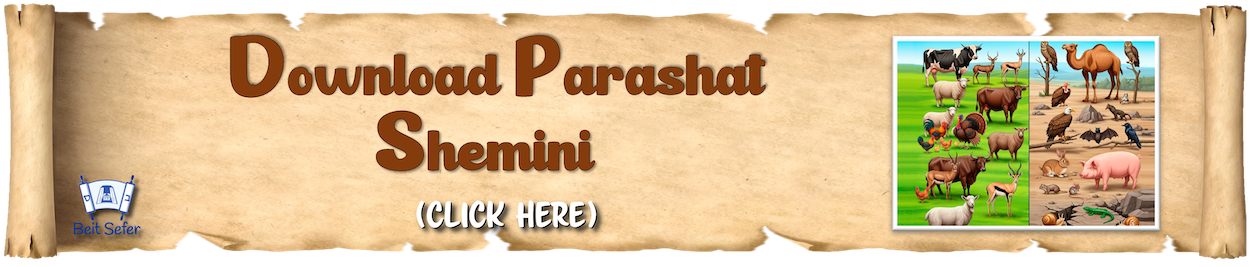
–
Enjoy this fun activity with the whole family. Inside you will find development questions for the three weekly sections (Torah, Haftarah and Brit Chadasha). While the older ones discuss the questions and their answers, the younger ones can color the picture related to the teaching, solve a maze, find the 7 differences and much more. We encourage you to do it week by week and instill in your children the habit of studying Yahweh’s word as a family.
We hope you and especially your sons and daughters enjoy this effort. For it is through the study of the Scriptures that we can come to understand the love and care that Yahweh has always had for us. And also to perceive that He has been taking care of even the smallest detail, so that we can take care and enjoy all that He gives us. That is why it is so important that our children learn and grow up knowing that they are loved by the Creator of all that exists.
Shalom.
To view the Tanach studies, click here

