


Parashat Miketz – Year 3 – Joseph Tests His Brothers.
Shabbat Shalom, Nazarene family.
This week we will study the parashat Miketz, portion of year 3, where we will see how Joseph’s brothers return to Egypt with Benjamin and are invited to a special meal without understanding why. We will learn that Joseph, even without revealing his identity, shows compassion and tests their hearts. We will read how he places a cup in Benjamin’s bag to see if his brothers have changed since the past. This tense moment will prepare us for a great revelation. In this portion, we will see acts of humility, fear, and signs of true repentance.
B’reisheet (Genesis) 44:16-17
16 Then Judah said, “What shall we say to my master? What shall we speak? Or how shall we clear ourselves? Elohim has found out the iniquity of your servants; here we are, my master’s slaves, both we and he also with whom the cup was found.”
17 But he said, “Far be it from me that I should do so; the man in whose hand the cup was found, he shall be my slave. And as for you, go up in peace to your father.”
This week corresponds to the reading of the texts (in bold):
- B’reisheet (Genesis) 41:1-52 / 41:53-43:15 / 43:16-44:17
- Zekaryah (Zechariah) 3:1-10 / 4:1-7 / 4:8-14
- Luqa (Luke) 4:1-13 / 4:14-30 / 4:31-44
Summary of the weekly study, Year three:
B’reisheet (Genesis) 43:16-44:17
In these verses, Joseph continues to test his brothers to see if they have truly changed since they sold him. By welcoming them with hospitality, he shows kindness, but he also creates a difficult situation by placing his cup in Benjamin’s bag. Judah and his brothers react with desperation and unity, revealing a transformed heart. Judah even offers himself as a slave in place of his younger brother. In this passage, we learn that true repentance is demonstrated through actions, and that family restoration requires courage, sacrifice, and sincerity.
Zekaryah (Zechariah) 4:8-14
In these verses, Yahweh’s message comes to Zechariah to encourage Zerubbabel in rebuilding the Temple. It emphasizes that the work will not be completed by human strength or power, but by the Spirit of Yahweh. The vision of the two olive trees and the lampstand symbolizes the constant presence of the Spirit and divine provision. The two anointed ones represent servants chosen to fulfill a special purpose. In this passage, we learn that true success in the works of the Kingdom depends on spiritual guidance and the support of the Spirit of Yahweh.
Luqa (Luke) 4:31-44
In these verses, we see Yeshua teaching with authority in the synagogue of Kfar Nahum (Capernaum) and surprising everyone with His power. We learn how He rebukes and casts out demons, healing many, including Simon’s mother-in-law. People crowd around to hear Him and be healed, but Yeshua reminds them that He has come to proclaim the Good News of the Kingdom, not just to heal. In this passage, we learn that His mission goes beyond miracles: He came to bring light, freedom, and hope, carrying the message of the Kingdom to all corners of the earth.
–
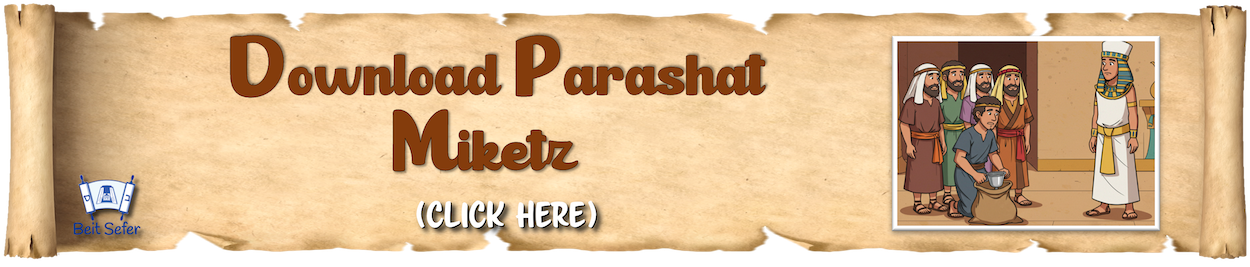
Enjoy this fun activity with the whole family. Inside you will find development questions for the three weekly sections (Torah, Haftarah and Brit Chadasha). While the older ones discuss the questions and their answers, the younger ones can color the picture related to the teaching, solve a maze, find the 7 differences and much more. We encourage you to do it week by week and instill in your children the habit of studying Yahweh’s word as a family.
We hope you and especially your sons and daughters enjoy this effort. For it is through the study of the Scriptures that we can come to understand the love and care that Yahweh has always had for us. And also to perceive that He has been taking care of even the smallest detail, so that we can take care and enjoy all that He gives us. That is why it is so important that our children learn and grow up knowing that they are loved by the Creator of all that exists.
Shalom.
To view the Tanach studies, click here

